The 60th Annual Oral History Association Meeting announced a partnership with the University of Alaska Fairbanks Oral History Program's Project Jukebox to co-locate selected oral histories. This collaboration expands access to Alaska's innovative digital oral history collection, integrating interviews with photographs, maps, and place-based storytelling to document diverse communities, cultures, and environments.
NOAA Voices at the 2026 Oral History Association Annual Meeting The 60th Annual Oral History Association Meeting will take place October 14–17, 2026, in Portland, Oregon.
The University of Alaska Fairbanks Oral History Program's Project Jukebox is partnering with the University of Alaska Fairbanks to co-locate selected oral histories, expanding access to a national digital oral history collection. The project integrates interviews with photographs, maps, and place-based storytelling to document Alaska's diverse communities, cultures, and changing environments. The project is available for download.
NOAA marked a significant milestone in weather modeling on November 3 with the implementation of the Rapid Refresh Forecast System (RRFS), a next-generation system that combines the strengths of NOAA's existing regional models to deliver detailed, hourly-updating short-term forecasts over North America. RRFS extends forecast lead times to 84 hours and includes advanced functions for fire weather, smoke, and dust plume predictions. The transition from research to operations represents a major step towards modernizing NOAA's weather forecast modeling suite, enhancing safety and security for Americans.
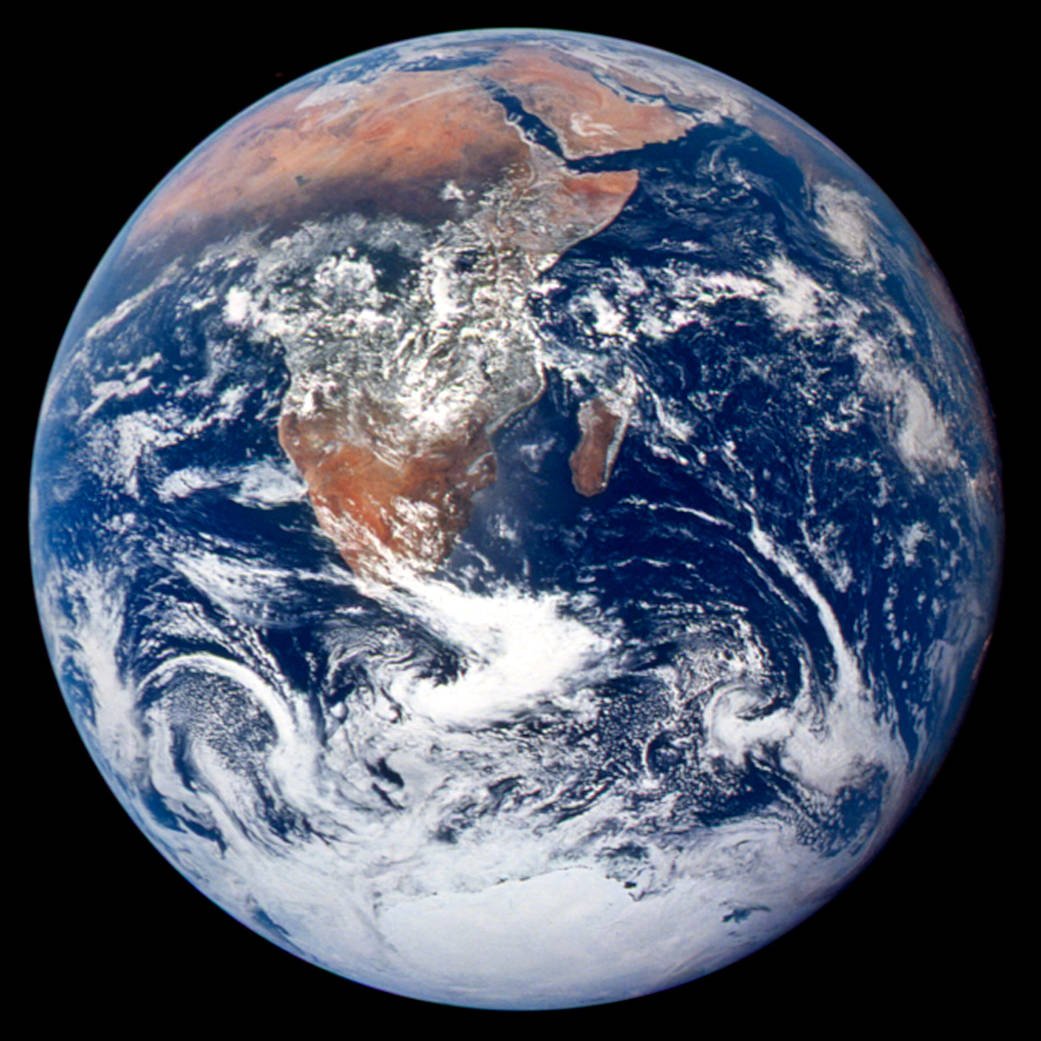
With permission.) Atypical weather conditions caused the Antarctic ozone hole to grow to an unusually large size in 2026, NOAA and NASA scientists reported today, though they said the protective ozone layer is still on track to recover by later this century.
Canadian astronaut Joshua Kutryk completed the installation of the eighth and final roll-out solar array on the International Space Station on October 29, 2026. The eight arrays will increase the station's available power by up to 30%. The pair also performed some get-ahead work for their next spacewalk, which will take place on November 5, 2026.
U.S. National Science Foundation-supported researcher Jonathan Zuegel discusses the future of high-powered laser research in the United States, the ambitious NSF Optical Parametric Amplifier Line (NSF OPAL) laser facility.
The four-member Crew Health and Performance Exploration Analog (CHAPEA) crew poses outside for the first time in more than a year following the end of their simulated Mars journey on Oct. 31, 2026.
MIT researchers have developed a new method to create designer materials from nanoparticles by using super-flexible connector molecules that can deform based on their surrounding environment. The technique allows for the creation of new kinds of nanoparticle-based materials with more versatility and control over their structure. The approach could offer a more efficient way to build designer materials for various applications such as photonics, chemical catalysis, medicine, agriculture, and more.
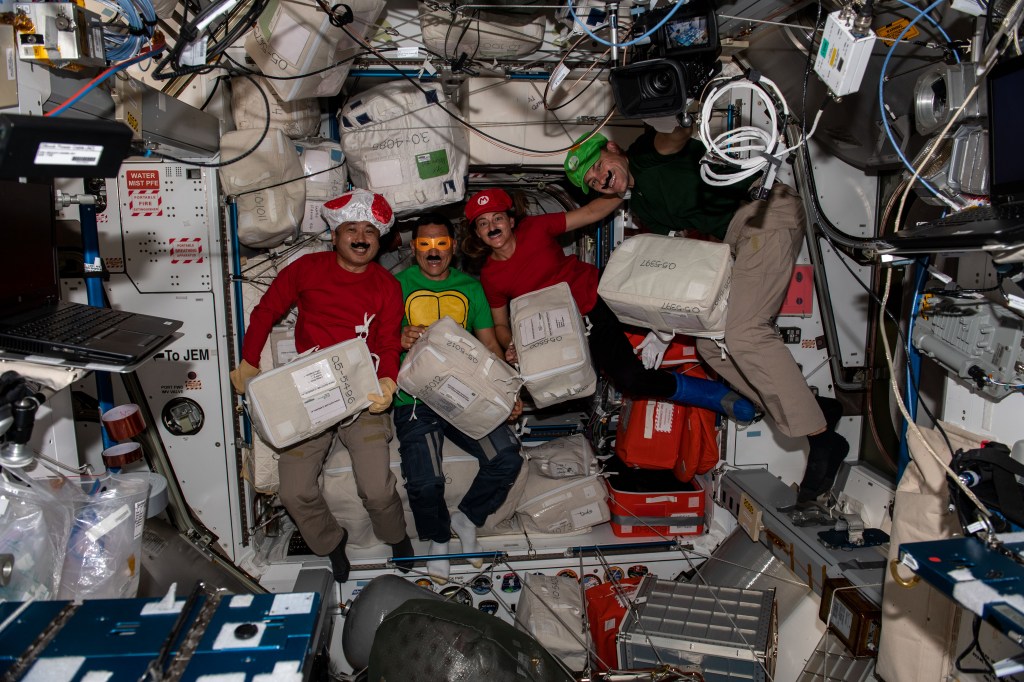
Crew members aboard the International Space Station dress up in Halloween-themed costumes, often inspired by materials available on board. The space station remains a vital scientific platform for future space exploration.
The first named storm of the 2026 North Indian Ocean cyclone season—Arnab (pronounced Or-nab)—emerged in the Bay of Bengal on October 25, a rather late start for a basin that typically produces named cyclones in April or May.
We introduce a sleep phase in continual learning, enabling large language models to continuously integrate new facts and enhance reasoning while mitigating catastrophic forgetting. Modern LLMs achieve impressive performance via pre-training and in-context learning, but remain static after deployment. The sleep framework allows LLMs to continuously acquire new facts, retain long-context knowledge up to 10M tokens, and improve complex reasoning.
The National Institute of Standards and Technology (NIST) has released a guide to help organizations switch to post-quantum cryptography (PQC) standards, which are designed to withstand future quantum computer attacks. The report outlines NIST's approach and timelines for the transition, focusing on different use cases and migration strategies. The document aims to inform federal agencies, industry partners, and standards organizations about the changes needed during the modernization of cryptographic systems.
NIST··1 min read
LESS NOISE. MORE SIGNAL.
A little further into the unknown.
Follow our open news feed. No inbox clutter. Just the latest dispatches, in your reader.

 NRKZ Signal · Signal illustration