In March 2026, members of NOAA's Basic Officer Training Class 147 visited the NOAA Aircraft Operations Center in Lakeland, Florida, to see one of the fleet's most versatile aircraft, the Twin Otter. The visit provided them with a firsthand look at the aircraft's capabilities. The event took place on September 15, 2026, under the Marine & Aviation category of NOAA Corps 0 Off.
The U.S. National Science Foundation today announced a $20 million investment to launch a two-year pilot supporting small businesses in commercializing their deep-technology ventures.
The U.S. National Science Foundation is embracing a portfolio approach to support ambitious, multidisciplinary inquiry at the scientific frontier. The organization is expanding who carries out NSF-supported work and how, to enable exceptional science to happen more often and frequently. NSF's role is to create conditions for exceptional science to happen more often and more frequently. The changes are part of a broader rethinking of the U.S. science and technology enterprise.
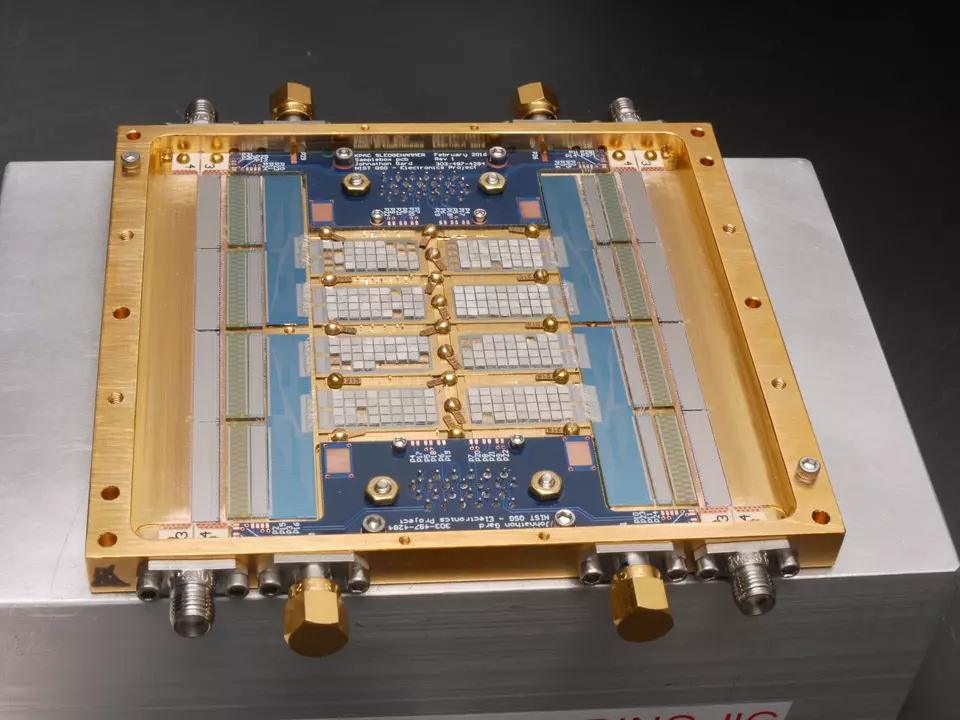
Scientists at NIST have developed quantum sensors to measure the unique pattern of gamma rays emitted by specific radioactive elements, which is crucial for monitoring nuclear materials at power plants and weapons facilities. The new technology allows for more accurate assessment of nuclear stockpiles by filtering out X-ray background noise.
MIT researchers have discovered that short bursts of pink noise during sleep can increase the size of cerebrospinal fluid waves, potentially improving cognitive function and slowing neurodegenerative diseases. The study, published in Science Translational Medicine, aims to explore the effects of this technology on clinical populations.
MIT researchers have developed an electrochemical approach to purify ammonia for hydrogen, reducing the temperature and energy required for hydrogen recovery from ammonia and other hydrogen carriers. The method uses electricity to drive thermodynamically uphill and kinetically difficult dehydrogenation reactions, with the potential to be translated to other important dehydrogenation reactions.
U.S. National Science Foundation-supported researchers are behind an educational effort to introduce super intelligence (SI) techniques to elementary school children.
Tiffany Barnes, Shiyan Jiang, and Xiaoyi Tian discuss their U.S. National Science Foundation-supported project, the challenges of introducing super intelligence (SI) concepts into elementary school curriculum, and how the project led to a win in the inaugural Presidential SI Challenge.
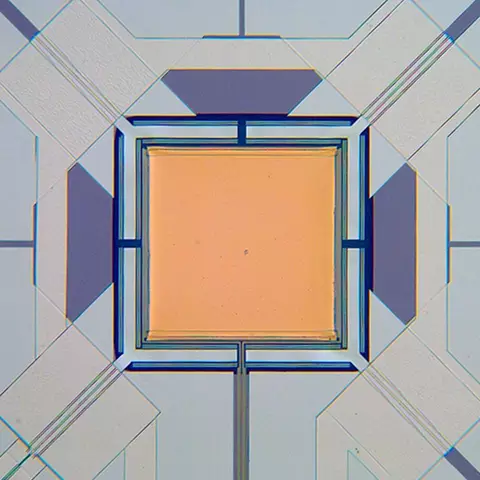
NIST researchers are enhancing quantum technology to detect faint photons, crucial for applications like biomedical imaging and astronomy. Each photon disrupts an electric current, registering pulses that provide information about the light. This advancement is vital for cutting-edge technologies like quantum computing and deep-tissue imaging.
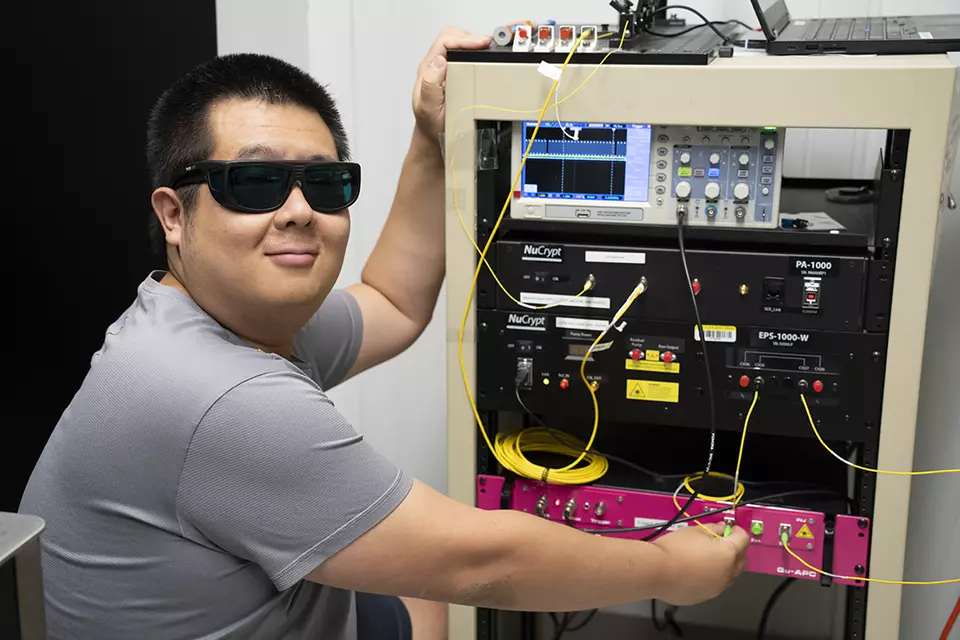
In early 2025, special signals traveled through a fiber-optic highway in Maryland suburbs, marking a significant step toward building a quantum network. Researchers believe this technology could supercharge scientific research, enable secure communications, and boost future quantum computer power.
Google researchers integrated reinforcement learning with quantum error correction to show a quantum computer can adapt to drift and remain stable during long computations. This approach allows the quantum system to continuously adjust control parameters, stabilizing it against drift during the computation. The method, described in 'Reinforcement Learning Control of Quantum Error Correction' published in Nature, addresses the fundamental bottleneck for future quantum algorithms, which require continuous operation for days or months.
The U.S. Department of Commerce's National Institute of Standards and Technology (NIST) has partnered with SRI International to establish the Quantum Manufacturing Engineering Center (QMEC). The center aims to accelerate the manufacturing of scalable, high-performance quantum components and systems, focusing on enabling technologies like cryostats and lasers. NIST plans to invest $20 million in the center's activities. This initiative is part of efforts to drive growth in the U.S. quantum industry.
NIST··1 min read
LESS NOISE. MORE SIGNAL.
A little further into the unknown.
Follow our open news feed. No inbox clutter. Just the latest dispatches, in your reader.

 NRKZ Signal · Signal illustration