CERN has launched an updated Safety at CERN e-learning course to reinforce its safety culture. The course, designed for all members of the CERN community, provides a concise introduction to working safely and promotes awareness of safety principles. The course is aimed at refreshing knowledge and reflecting on daily safety practices. It takes approximately 10-15 minutes to complete.
MIT researchers have developed a method to reprogram natural killer (NK) cells to target cancerous or autoreactive T cells, potentially bypassing manufacturing challenges. Using lipid nanoparticles, they deliver messenger RNA encoding CAR constructs to NK cells, enabling them to attack diseased T cells without removing them from the patient's body. This approach could be applied to various diseases and reduce the time and expense associated with manufacturing CAR NK cells.
The International Day for Disaster Risk Reduction theme 'Resilience Starts at Home' emphasizes the importance of preparedness. CERN encourages its community to receive emergency alerts from CERN and official alerts from Host States to strengthen resilience. Staying connected to trusted sources of information is a practical way to contribute to a safer community.
Bjarne Stroustrup, the creator of C++, spoke at a CERN seminar on improving software for scientific computing. The event, titled '21st Century C++', aimed to help software developers prepare for future computing challenges. CERN's Main Auditorium was packed with an estimated audience of around 900 people, including an additional viewing space in the Council Chamber. Stroustrup emphasized the importance of clear, simple code for better software development and reliability.
A geologic feature in Western Australia, known as Spider Crater, is a remnant of a meteorite impact that occurred hundreds of millions of years ago. The crater, measuring about 13 kilometers by 11 kilometers, has an oval shape with a central uplift and sandstone ridges that have endured while other rock layers have eroded away. Scientists initially struggled to explain its formation but identified shatter cones, which are only formed by intense shock waves, as evidence of a past impact.
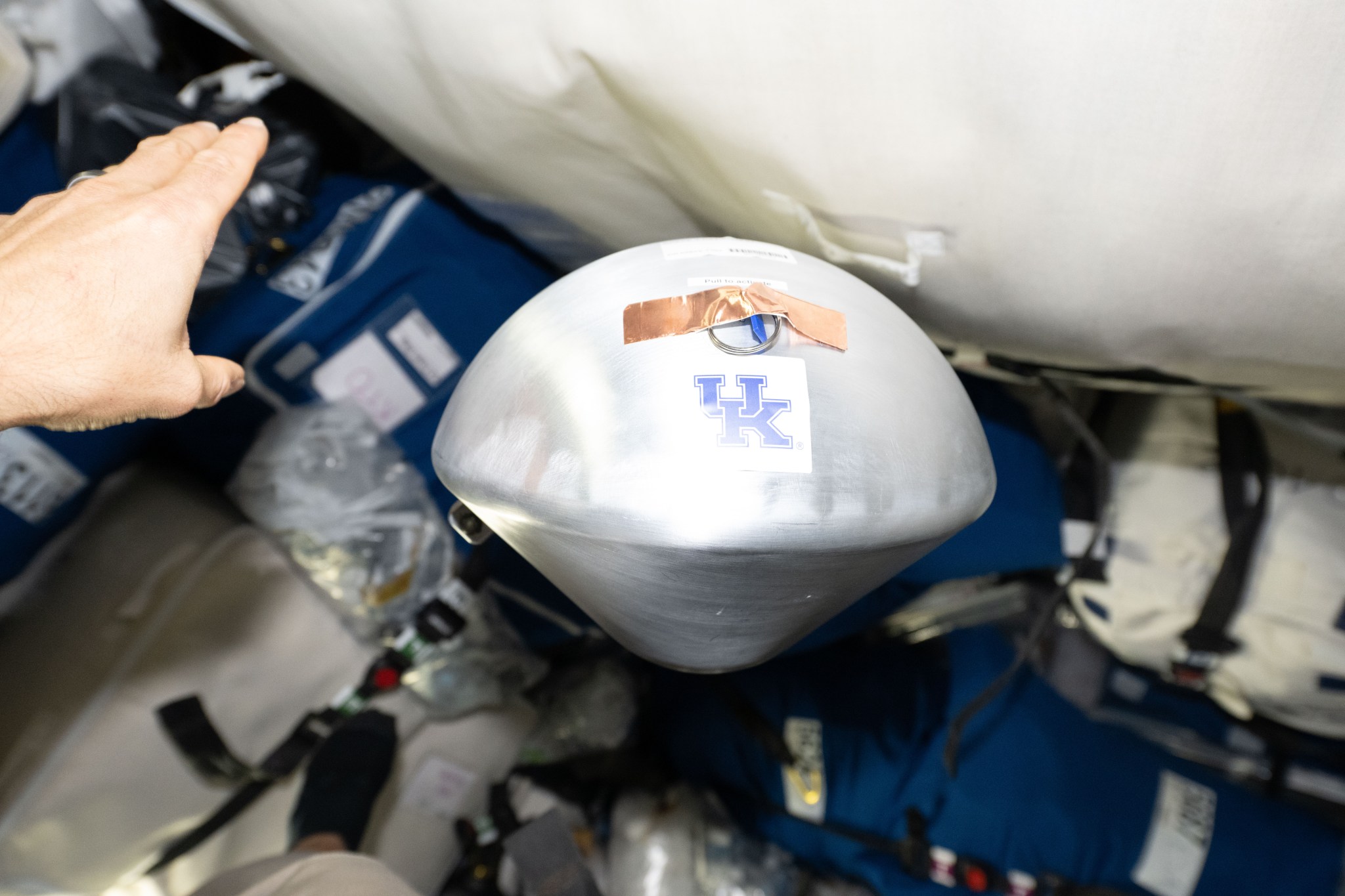
NASA's SpaceX CRS-35 mission will send experiments focused on human and plant health and drug-resistant organisms to the International Space Station. The research, supported by the Biological and Physical Sciences division, includes 3D brain models, a crop disease study, a faster health assessment method, and an analysis of antibiotic-resistant bacteria. The precision health investigation aims to understand how the human brain responds to stress in space, potentially aiding future missions to the Moon and beyond.
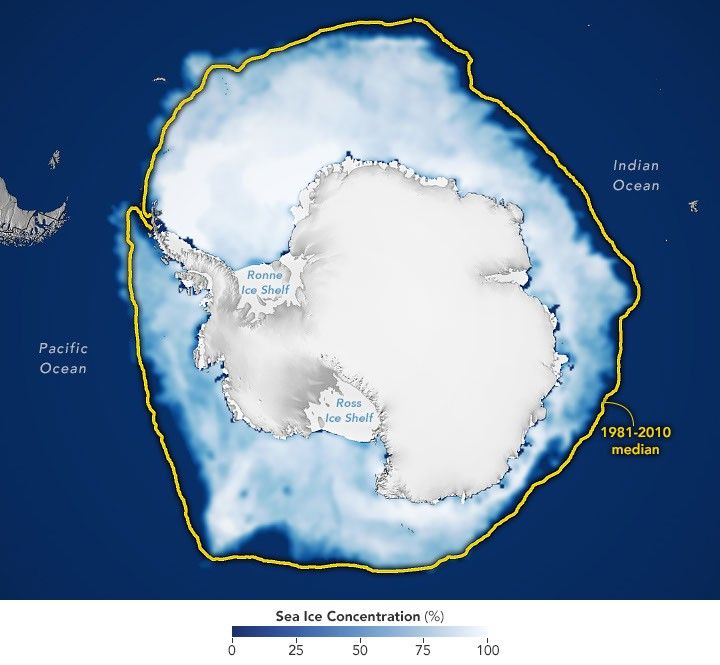
This story is an update to the Antarctic sea ice feature in our World of Change series tracking long-term change on Earth's surface through satellite imagery.
Trump Administration releases America First Seafood Strategy Key actions will strengthen U.S. fisheries, processing capacity, and coastal economies October 23, 2026 Fishing vessel in Point Judith, Rhode Island. (Image credit: NOAA Fisheries) Download Image Today, President Trump announced the America First Seafood Strategy , a key directive under the president’s Executive Order Restoring American Seafood Competitiveness .
NASA is seeking US industry plans for the next generation of commercial space stations, aiming to maintain a sustained American presence in low Earth orbit after the International Space Station retires. The agency released a final Request for Proposals inviting companies to submit plans for commercial space stations, emphasizing the need for new opportunities for American industry and the potential for NASA to focus on more challenging missions. Proposals are due by Dec. 8, with contract awards expected in spring 2027.
NASA is testing heat shields that could protect astronauts returning from missions to the Moon and Mars. The experiment, called KREPE-3, uses the final moments of cargo spacecraft to gather data on next-generation thermal protection materials. It's part of a series of low-cost, high-impact missions under the EPSCoR program.
A stunning image from NASA's James Webb Space Telescope shows galaxies in a galaxy cluster called MACS J0454.1-0300, where the golden galaxies appear to be part of the cluster but are actually much farther away. This is due to gravitational lensing, where the immense mass of a foreground object bends and magnifies the light from a more distant object in the background.
September falls in the heart of the monsoon season in Thailand, where cities and towns are accustomed to the afternoon rains and thunderstorms that frequently roll through.
Media are invited to join NASA for a media teleconference at 4 p.m. EDT, Thursday, Oct. 15, to preview the agency’s contributions to JAXA’s (Japan Aerospace Exploration Agency) Martian Moons eXploration (MMX) mission.
NASA announces two new initiatives to deepen scientific understanding and accelerate innovation for the Science: A Golden Age Summit. The programs reflect NASA's commitment to pioneering research and advancing the Trump Administration's vision. A peer review initiative and a fellowship for researchers are highlighted. NASA aims to be at the forefront of the new Golden Age of American innovation and discovery.
Saildrone research fleet to circle Antarctica for 5 years NOAA and partners to test limits of technology and science A Saildrone uncrewed surface vehicle is towed out of the Australian port of Hobart, Tasmania, before being released into the Southern Ocean to collect vital oceanographic data. (Image credit: Courtesy of CSIRO/APP) October 13, 2026 The Southern Ocean is one of the roughest and most dangerous bodies of water on Earth.
The U.S. National Science Foundation (NSF) announced a series of initiatives aimed at improving how it evaluates and supports science, harnessing super intelligence, and investing in exceptional students and early-career researchers. The NSF is establishing an Office of Metascience to study scientific communities' responses to novel review and funding mechanisms and share findings with academia, industry, and philanthropy. The agency is also launching two Grand Research Challenge (GRC) prize competitions to facilitate cross-disciplinary collaboration and spur rapid advances in crucial areas of science and technology.
Protons, antiprotons, electrons, positrons, oxygen and lead ions… the Super Proton Synchrotron (SPS) has been juggling particles with ease for the past 50 years.
CERN··1 min read
LESS NOISE. MORE SIGNAL.
A little further into the unknown.
Follow our open news feed. No inbox clutter. Just the latest dispatches, in your reader.

 NASA/Joel Kowsky · Archive image