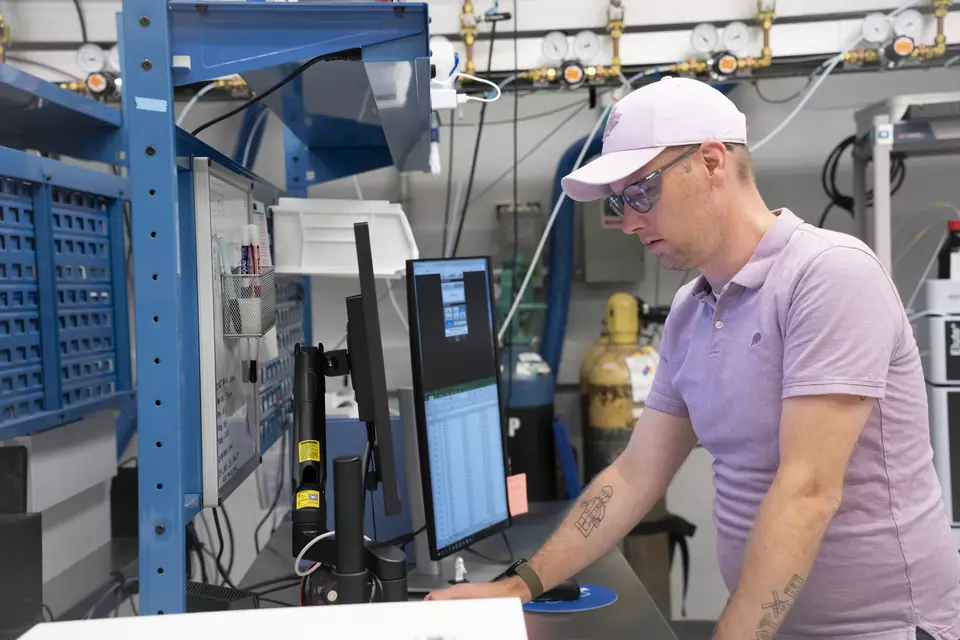
A new NIST study found that harmful and potentially deadly substances, including anesthetics and industrial chemicals, are increasingly mixed into the illicit fentanyl supply. The study analyzed 4,563 drug residue samples collected nationwide between 2024 and 2026, revealing changes in adulterant prevalence and regional variations. This information could help first responders identify specific adulterants and provide timely medical treatment, potentially saving lives.
Solar Orbiter spacecraft has traced the origin of mysterious magnetic switchbacks in the solar wind's magnetic field. By fingerprinting particles within switchbacks, scientists have revealed more about solar magnetism and its role in dangerous solar storms. The spacecraft's observations have helped solve a piece of the puzzle regarding switchback formation, confirming their S-shaped nature.
Until recently, Massachusetts shellfisheries relied on a low-tech system of neighbors reporting rain gauge measurements to close shellfishing areas. However, this system is inefficient and outdated. MIT researchers have developed Seashell, a web-based platform that aims to streamline natural resource management and support productivity of shellfisheries, safe human consumption, and vitality of coastal economies. The platform is scalable and can be used by state agencies and individual permit holders to make decisions in real time, ensuring reliable local food supply.
Scientists using Mars Express and a meteorological model have discovered that Mars's Arsia Mons Elongated Cloud (AMEC) may be an orographic cloud, a type of cloud also seen on Earth. However, simulations have not accurately reproduced the cloud's behavior, and researchers are now exploring its unique dynamics and behavior.
Commerce Department allocates $15.8M in fishery disaster funding to Fla., Calif., and Makah Tribe October 22, 2026 Fishery resource disaster funding will address multiple disasters and support local coastal economies including the fishery for California sea urchins, like the one pictured. (Image credit: AdobeStock) Today, NOAA announced the allocation of $15.8 million in fishery resource disaster funding, appropriated by Congress in the American Relief Act, 2025 .
As AI accelerators evolve, understanding their capabilities is crucial for maintaining technological advantage. The Lincoln Laboratory Supercomputing Center's Lincoln AI Computing Survey (LAICS) has been tracking the development of AI accelerators since 2018, summarizing current commercial accelerators and comparing their peak performance and power. The survey aims to identify the best accelerators for specific needs.
Google Earth AI introduces a new model, the Population Dynamics Foundation Model (PDFM), to address data gaps and temporal reporting lags in public health. The model, based on self-supervised learning, integrates diverse signals like search trends, human mobility, and environmental determinants into compact embeddings, enhancing existing epidemiological workflows without requiring extensive custom data engineering. The model is demonstrated in five case studies, showing its effectiveness in various disease domains and geographic settings.
A new workshop report from Google explores open research directions for building AI agents that users can trust. It addresses foundational privacy and security challenges faced by autonomous agents, including access to personal data and behavioral flexibility. The report aims to coordinate defenses at system, model, user, and ecosystem levels.
NOAA will announce the U.S. Winter Outlook for December 2026 through February 2027 on October 15, 2026. Experts will discuss temperature and precipitation predictions, drought conditions, and El Nino impact on the season. The media briefing will include a moderated question-and-answer session.
Astronomers have discovered a star slowly snacking on a brown dwarf companion, a planet-like object orbiting within the Milky Way galaxy 300 light years away. This discovery reveals a new way that stars can interact with planetary companions and suggests the slow stellar cannibalism could continue for hundreds of thousands or even billions of years.
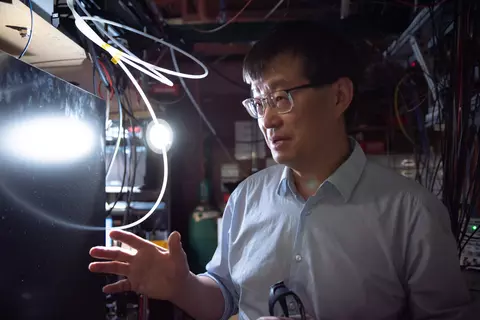
Physicist Jun Ye of the U.S. Department of Commerce's National Institute of Standards and Technology (NIST) has been awarded the 2026 Wolf Prize in Physics. Ye's achievement in
NIST··1 min read
LESS NOISE. MORE SIGNAL.
A little further into the unknown.
Follow our open news feed. No inbox clutter. Just the latest dispatches, in your reader.

 Source image · Megan King/NIST