Tiffany Barnes, Shiyan Jiang, and Xiaoyi Tian discuss their U.S. National Science Foundation-supported project, the challenges of introducing super intelligence (SI) concepts into elementary school curriculum, and how the project led to a win in the inaugural Presidential SI Challenge.
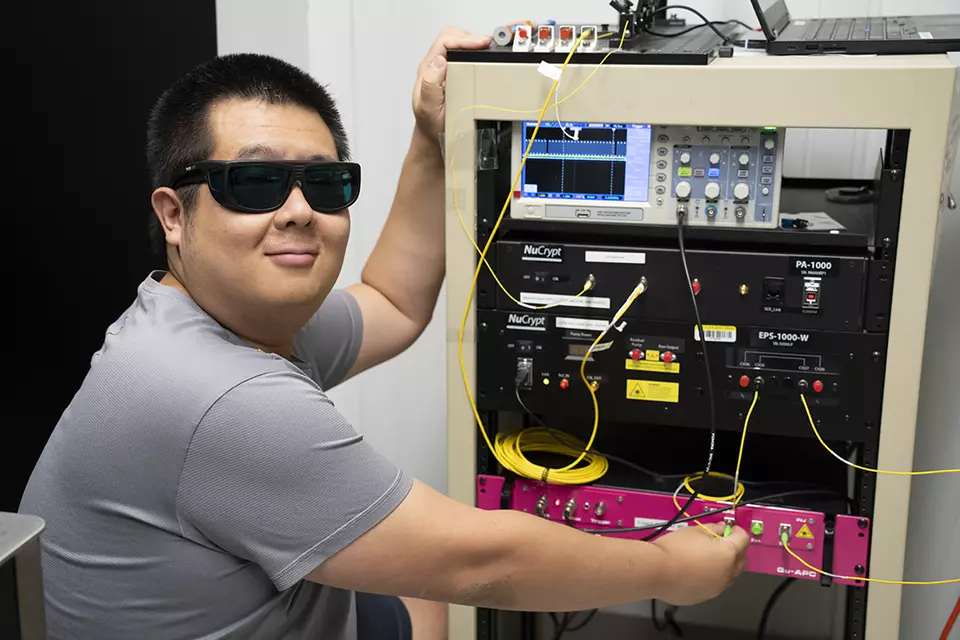
NIST researchers are enhancing quantum technology to detect faint photons, crucial for applications like biomedical imaging and astronomy. Each photon disrupts an electric current, registering pulses that provide information about the light. This advancement is vital for cutting-edge technologies like quantum computing and deep-tissue imaging.
An AI system called Biomarker Discovery Framework prioritizes candidate biomarkers from wearable sensor data, addressing the bottleneck in turning physiological signals into reliable biomarkers. It combines hypothesis generation, statistical analysis, and literature-grounded reasoning to maintain strict statistical rigor and human oversight. Across three cohorts, it recovered known clinical signals, identified convergent biomarkers, and improved downstream prediction when combined with demographic features.
Google Research introduces a dynamic, mobility-informed framework that enhances AI models' understanding of places by incorporating real-world functional dynamics. The framework, called Mobility-Embedded POIs (ME-POIs), improves predictions on attributes like opening hours, price levels, and busyness. Using publicly available benchmark datasets, ME-POIs blend text descriptions with anonymized mobility patterns, resulting in a 81.9% relative gain in visit intent prediction, 75.1% improvement in price level classification, and 24.7% increase in busyness estimation accuracy across unseen places.
Google Research introduces PhotoScan, a deep learning approach that estimates body composition from smartphone photos, predicting insulin resistance with accuracy comparable to DXA scans. This complements wearable sensor data with objective measures of body composition, offering a complete picture of metabolic risk. While DXA scans are the gold standard, PhotoScan's accuracy surpasses BIA sensors, providing insights into A/G and V/S ratios beyond BIA's capabilities. The study validates PhotoScan's accuracy across clinical cohorts and demonstrates its feasibility for use in a clinical research setting.
Google's AMIE AI system demonstrates expert-level performance in real-time video consultations, with a randomized controlled study showing its effectiveness in simulated consultations. The system integrates continuous visual and auditory cues with spoken clinical history, enhancing patient trust and communication. AMIE has been extended towards specialist-level evaluations in oncology, cardiology, and ophthalmology, and multimodal diagnostic reasoning over images and clinical documents. The system is currently being translated towards clinical practice through a framework for physician-centered oversight and ongoing randomized studies.
NIST researchers have developed a new analysis method to correct a pervasive error in data analysis of nanoparticles, which can provide misleading insights into their properties. The method, reported in ACS Nano, has implications for testing material properties and developing nanotechnology products. The correction reveals how nanoscale objects truly behave, including their color and other properties.
In early 2025, special signals traveled through a fiber-optic highway in Maryland suburbs, marking a significant step toward building a quantum network. Researchers believe this technology could supercharge scientific research, enable secure communications, and boost future quantum computer power.
The U.S. Department of Commerce's NIST and the DOE Office of Science have signed a memorandum of understanding to collaborate on using AI to address national science and technology challenges. This formalizes NIST's commitment to the Genesis Mission, which aims to double American science and engineering productivity within a decade. The MOU will enable coordination and leveraging of resources in areas like biotechnology, quantum science, and materials design and discovery.
Introducing the Science One Framework, a prototype designed to ensure verifiability in AI-driven research. It builds and maintains evidence chains, and includes CoE Audit for evaluating the integrity of AI-generated papers. Baseline systems hallucinate up to 21% of references, while the Science One Framework achieves zero phantom references and fully verifiable scores.
A research study by Google Research presents a conversational AI prototype designed to assess everyday symptom reports. The study involved 13,917 participants interacting with five SymptomAI agents, with participants reporting their diagnoses to healthcare providers two weeks later. The AI agents' differential diagnoses were compared to biosignals from Fitbit devices, showing correlation with immune response indicators, suggesting the AI's potential for accurate symptom assessment.
Google researchers integrated reinforcement learning with quantum error correction to show a quantum computer can adapt to drift and remain stable during long computations. This approach allows the quantum system to continuously adjust control parameters, stabilizing it against drift during the computation. The method, described in 'Reinforcement Learning Control of Quantum Error Correction' published in Nature, addresses the fundamental bottleneck for future quantum algorithms, which require continuous operation for days or months.
Google Research··1 min read
LESS NOISE. MORE SIGNAL.
A little further into the unknown.
Follow our open news feed. No inbox clutter. Just the latest dispatches, in your reader.

 NRKZ Signal · Signal illustration