It could also be used to develop strong, lightweight components for airplanes or modular robots, or architectural elements like sound-dampening panels and building facades.
J-PAL North America launches a free resource hub to provide evidence-informed tools for reducing homelessness and improving housing stability. The hub aims to equip decision-makers with foundational resources on leveraging evidence to reduce homelessness and improve housing stability. It is a public repository of multimedia content developed with a grant from Google.org. The hub is hosted by J-PAL North America on Oct. 27 and aims to increase access to evidence-informed paths to housing stability.
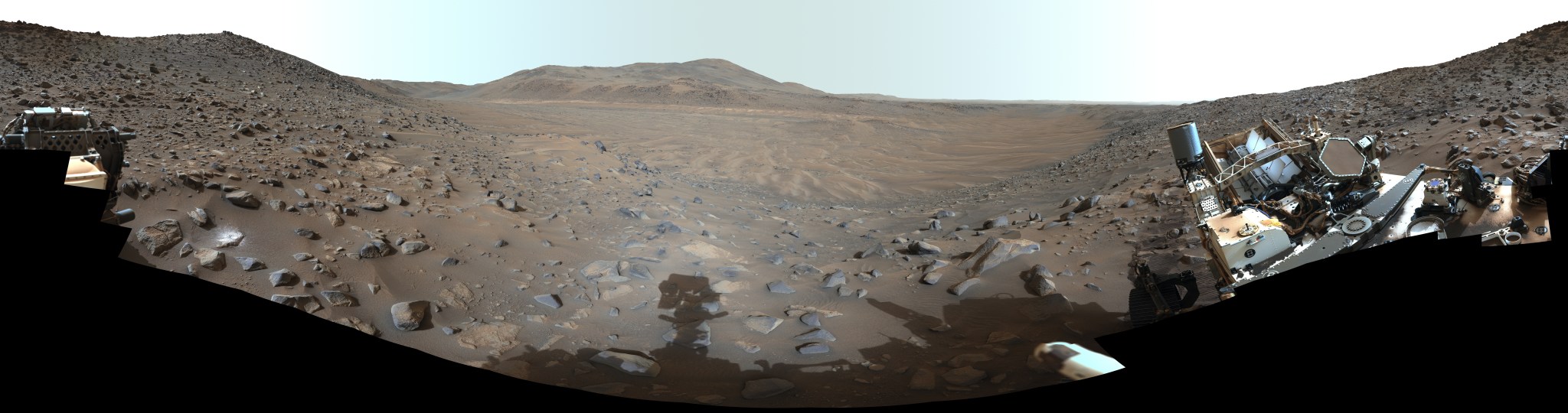
NASA's Perseverance rover captured a 360-degree view of Neretva Vallis, a dusty landscape on Mars, on May 20, 2024. The enhanced-color image shows the area as it was billions of years ago, when it was a river channel feeding into Jezero Crater. This work was done by Arizona State University, Malin Space Science Systems, and the Niels Bohr Institute. The rover was built by NASA's Jet Propulsion Laboratory.
NASA's Perseverance rover has measured fine and ultrafine Martian dust particles, including those small enough to penetrate the lungs, aiding in spacesuit and habitat design, and informing crew health standards for future Mars missions. The findings, published in Proceedings of the National Academy of Sciences, could improve existing designs before the first American astronauts arrive on Mars.
The large sunshade of NASA’s Near-Earth Object (NEO) Surveyor is mounted on an assembly ring during inspections in a clean room at BAE Systems Space & Mission Systems in Boulder, Colorado, in July 2026.
The large sunshade of NASA’s Near-Earth Object (NEO) Surveyor mission is inspected by a technician at BAE Systems Space & Mission Systems in Boulder, Colorado, in late July.
The NASA STEM (Science, Technology, Engineering, and Mathematics) Enhancement in Earth Science (SEES) Internship Program at the University of Texas Center for Space Research places high school students on small, mission-focused research teams mentored by NASA, academic, and industry experts.
NASA invites media to a new lunar landing simulation at Ames Research Center in California's Silicon Valley. The simulation uses motion-based simulators to prepare astronauts and engineering teams for commercial human landing systems. The Artemis program aims for the next lunar landing in 2028. Media will have the opportunity to participate in a Vertical Motion Simulator ride-along and interview experts.
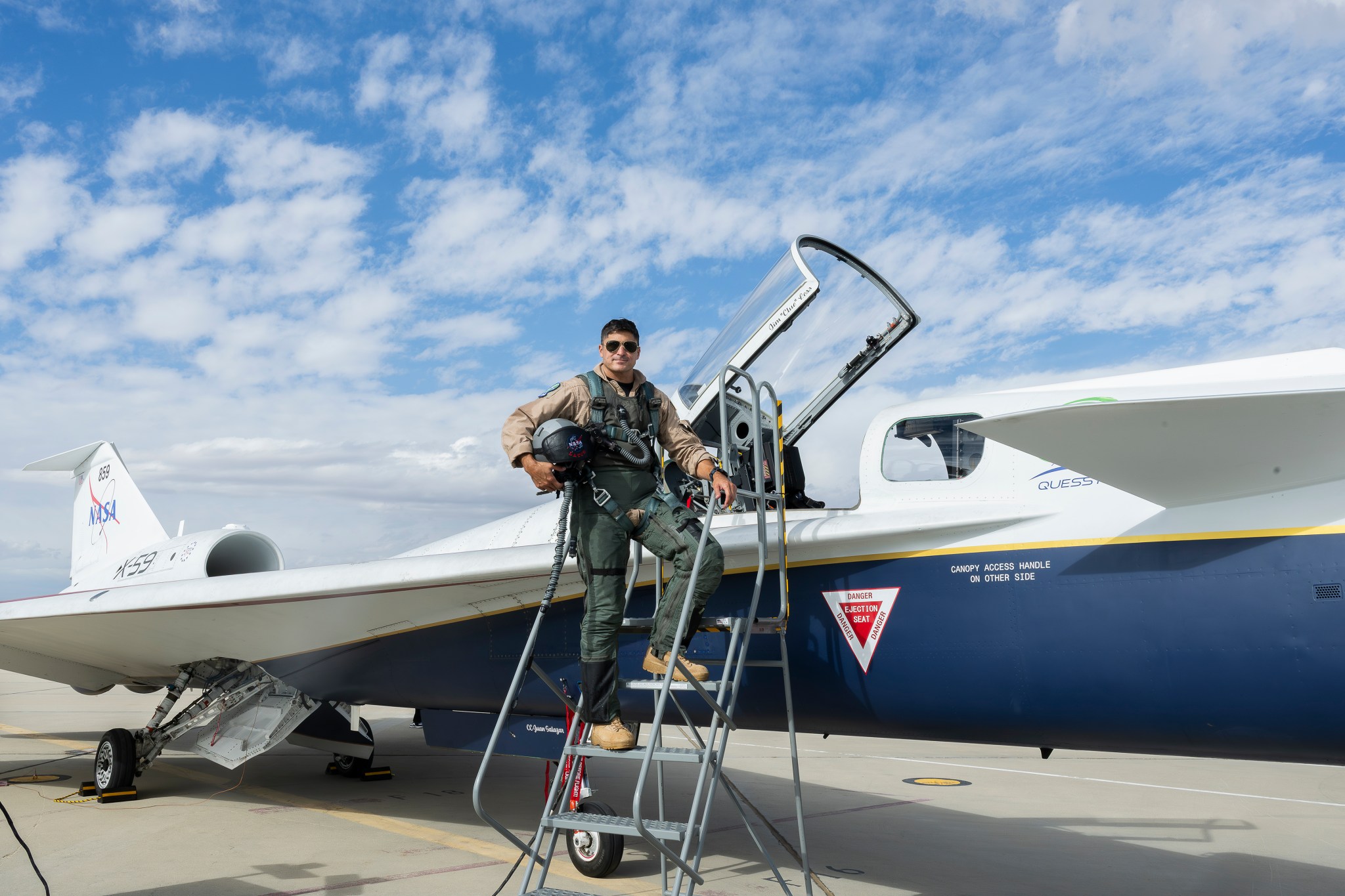
NASA test pilot Mike Lippert flew the agency's X-59 quiet supersonic research aircraft for the first time on October 21, 2026. The aircraft, which has flown numerous times since its inaugural flight in November 2025, made its first supersonic flight on June 5, 2026. Lippert took off from NASA's Armstrong Flight Research Center in Edwards, California, and landed one hour later after scheduled maintenance and a review of the aircraft's systems following its busiest week of testing to date.
NASA and the U.S. Department of Agriculture (USDA) have signed a Memorandum of Understanding expanding cooperation in Earth observation, geospatial analytics, and advanced data technologies, supporting USDA’s data modernization plan for United States agriculture.
The Great Nebula in Orion, an immense, nearby starbirth region, is one of the most famous astronomical nebulas. It is located 1500 light-years away and is surrounded by hot young stars and interstellar molecular clouds. The nebula can be seen with the unaided eye near the belt of three stars in the constellation Orion. It contains many stellar nurseries, including a bright open cluster of stars known as the Trapezium.
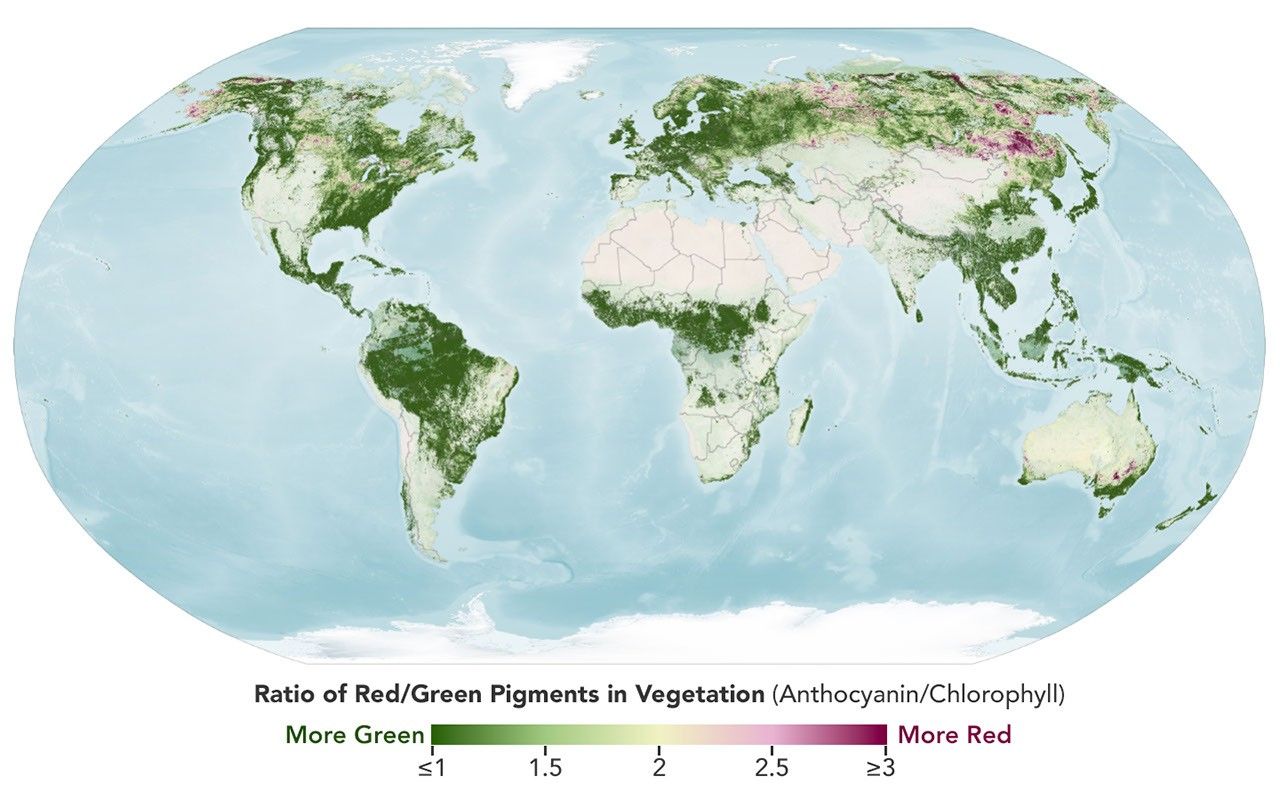
NASA's PACE satellite observes fall foliage displays with its hyperspectral OCI instrument, tracking red, orange, and yellow pigments in forests. The satellite detects particularly high levels of redness in northern and eastern Russia, northern Alaska, and northern Canada, while redness fades in New England and upstate New York. Many of the reddest areas are deciduous trees like sugar and red maples, with blueberries, bilberries, sedges, mosses, and grasses likely contributing to marshy tundra areas.
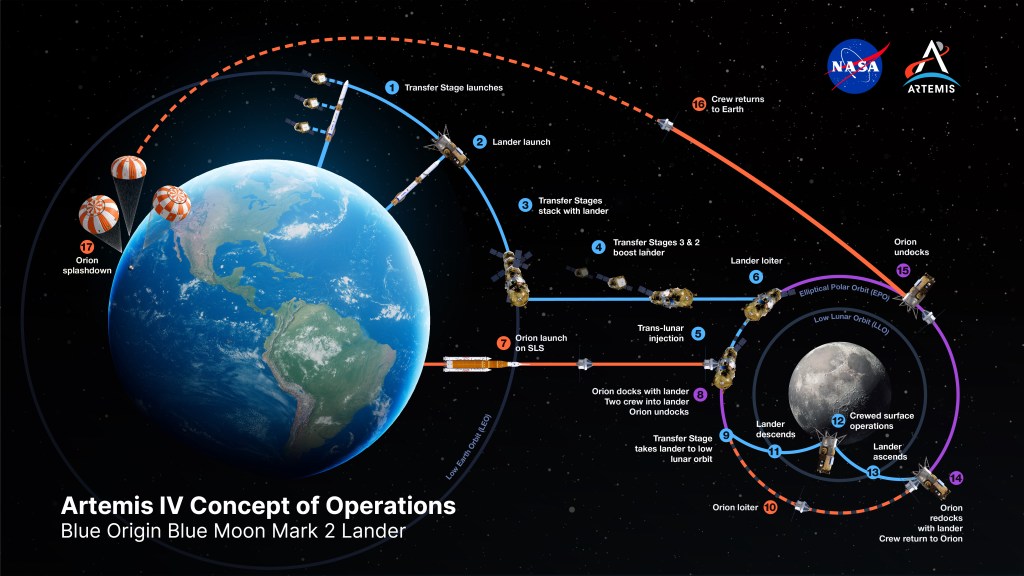
NASA is partnering with Blue Origin and SpaceX to develop crewed lunar landers for 2028 missions. The agencies are redefining Artemis III to demonstrate rendezvous and docking capabilities between landers and Orion in low Earth orbit. Both companies are developing crew and cargo versions of their landers for near-term missions. NASA aims to build a Super Bowl-caliber team to safely achieve the objectives and future missions.
NASA··1 min read
LESS NOISE. MORE SIGNAL.
A little further into the unknown.
Follow our open news feed. No inbox clutter. Just the latest dispatches, in your reader.

 NRKZ Signal · Signal illustration