Research teams at NASA Glenn perform experiments in world-class facilities such as the 9- by 15-Foot Low Speed Wind Tunnel, the Aero-Acoustic Propulsion Laboratory, the Small Hot Jet Acoustic Rig, the Nozzle Acoustic Test Rig, the DGEN Aero-propulsion Research Turbofan, and the Acoustical Testing Laboratory.
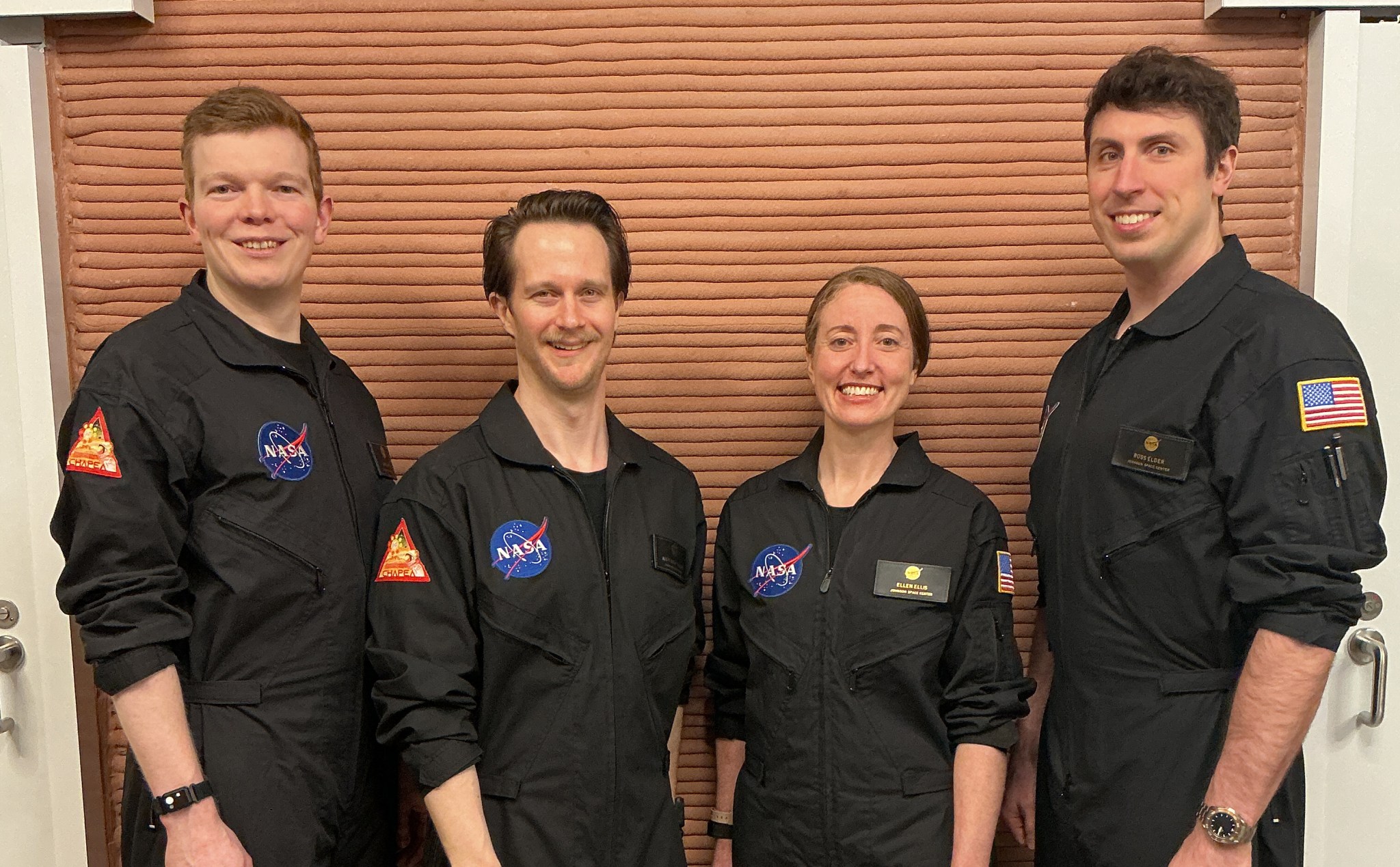
The four crew members in NASA’s simulated Mars mission have spent the past year living and working in isolation in a confined habitat at NASA’s Johnson Space Center in Houston.
NASA Glenn uses particle image velocimetry, hot wire anemometry, Raman spectroscopy, microphones in phased arrays, and rotating microphones to measure airflow and sound. The center's research is crucial for validating noise prediction software and improving noise reduction in aviation.
NASA Glenn researchers have used rotating microphones to measure the modal content of engine noise, providing crucial data for validating noise prediction software and improving engine performance. The technique, pioneered in the 1990s, has been applied in various tests including low-speed proof-of-concept and full-scale engine ground tests.
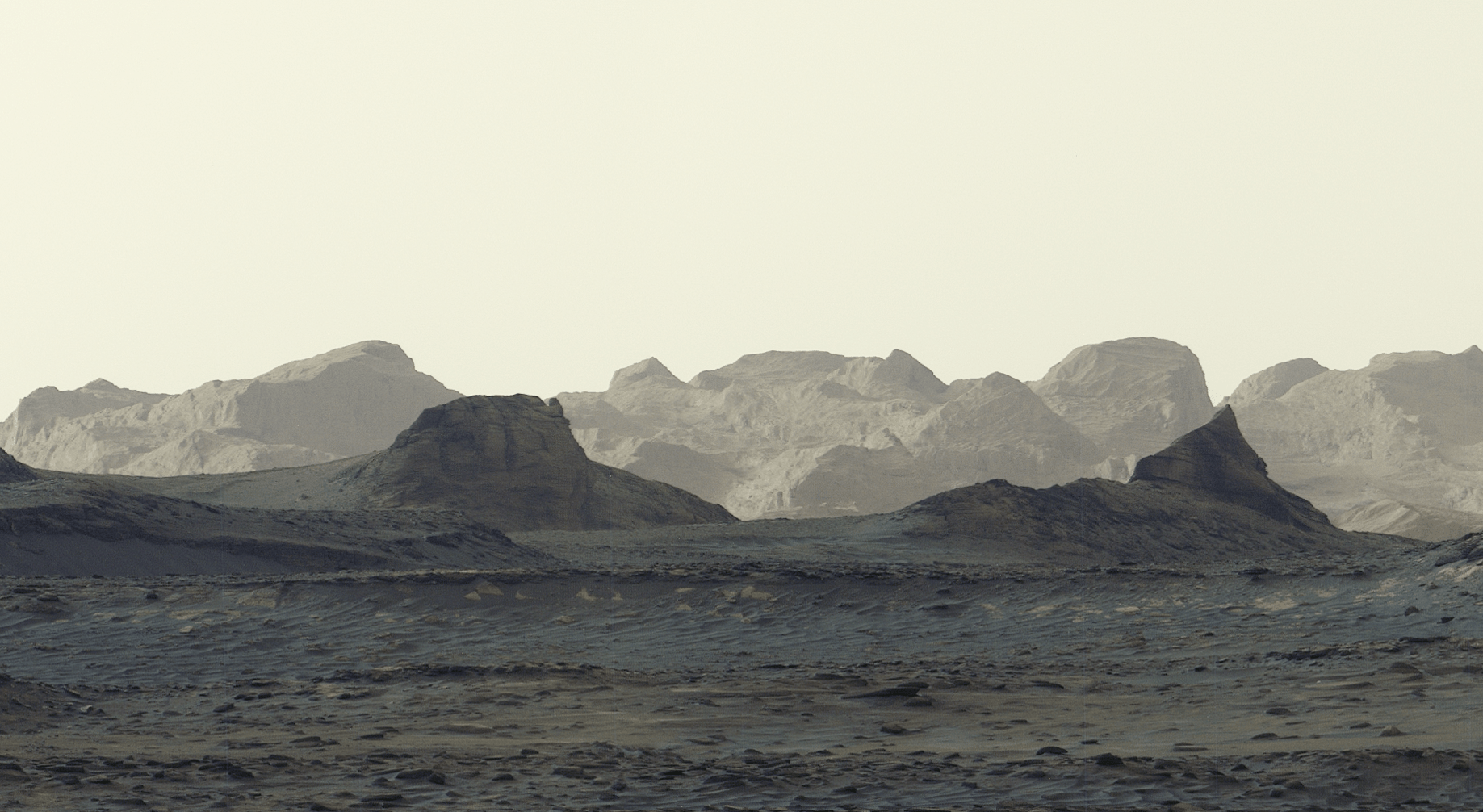
NASA's Curiosity rover captured a detailed image of Martian wind-eroded cliffs on October 6, 2026. The panorama, comprising six images stitched together, highlights features the mission's scientists have been waiting to see up close. The images were taken on Sol 4,982 of the mission.
The European Space Agency’s Euclid space telescope has discovered its first previously unknown comet, in images taken between 16 and 24 September 2026.
The core CMS pixel detector, installed for 10 years, was successfully extracted after one week. Originally proposed in 2010, it was upgraded in 2017 and 2022, reaching 95% of active channels despite higher radiation exposure. The team is now passing the baton to the Inner Tracker, with 4000 modules being assembled worldwide.
As the air grows cooler and days shorter, brown bears prowl the Carpathian Mountains of southern Poland with the goal of fattening up ahead of winter hibernation.
NASA Administrator Jared Isaacman has appointed Stephen Cash as the new director of the Marshall Space Flight Center in Huntsville, Alabama. Isaacman praised Cash's expertise in engineering and aerospace, noting his long career at the center and his commitment to the workforce and technical capabilities. Cash will oversee a workforce of over 5,000 employees and play a critical role in NASA's Artemis program, SLS rocket development, and other exploration missions.
Google Research is developing AI agents to navigate complex biological landscapes in wet labs, aiming to discover single-digit nanomolar protein binders for cancer targets. The initiative addresses two challenges: reliable reasoning about 3D geometry and physical state in specialized robots, and real-world feedback for hypothesis validation in wet-lab experiments. The projects highlight progress in bridging AI exploration and experimental validation.
Shortly after NASA's Artemis II mission splashed down on April 10, 2026, U.S. Navy divers captured underwater imagery of the Orion spacecraft's heat shield. In the months after, NASA measured the effectiveness of the thermal protection system, confirming that the heat shield performed as expected during reentry. This rigorous analysis underscores the spacecraft's safety and reliability.
Kittiwake Committee: Monitoring Black-legged kittiwakes in Homer, Alaska Black-legged kittiwake sitting on two chicks in the Homer harbor. (Image credit: Galen June) Download Image November 6, 2026 I’m Galen June, and I’m studying marine biology with a minor in statistics at Old Dominion University.
Quantifying primary productivity in a freshwater estuary in Huron, Ohio Bryn Fleming collecting American water lotus ( Nelumbo lutea ) in order to measure their rates of photosynthesis and respiration. (Image credit: Jacob Cianci-Gaskill) Download Image November 4, 2026 This summer, I worked with the Old Woman Creek National Estuarine Research Reserve (NERR) as a water quality research intern.
Reflecting on my time spent in the hatchery and creating a home in Juneau, Alaska Ella Skonieczny alongside her fellow Hollings intern Alleyah Britton, and mentor Becca, holding Pacific oysters ( Crassostrea gigas ) from the Salty Lady Seafood Company oyster farm.
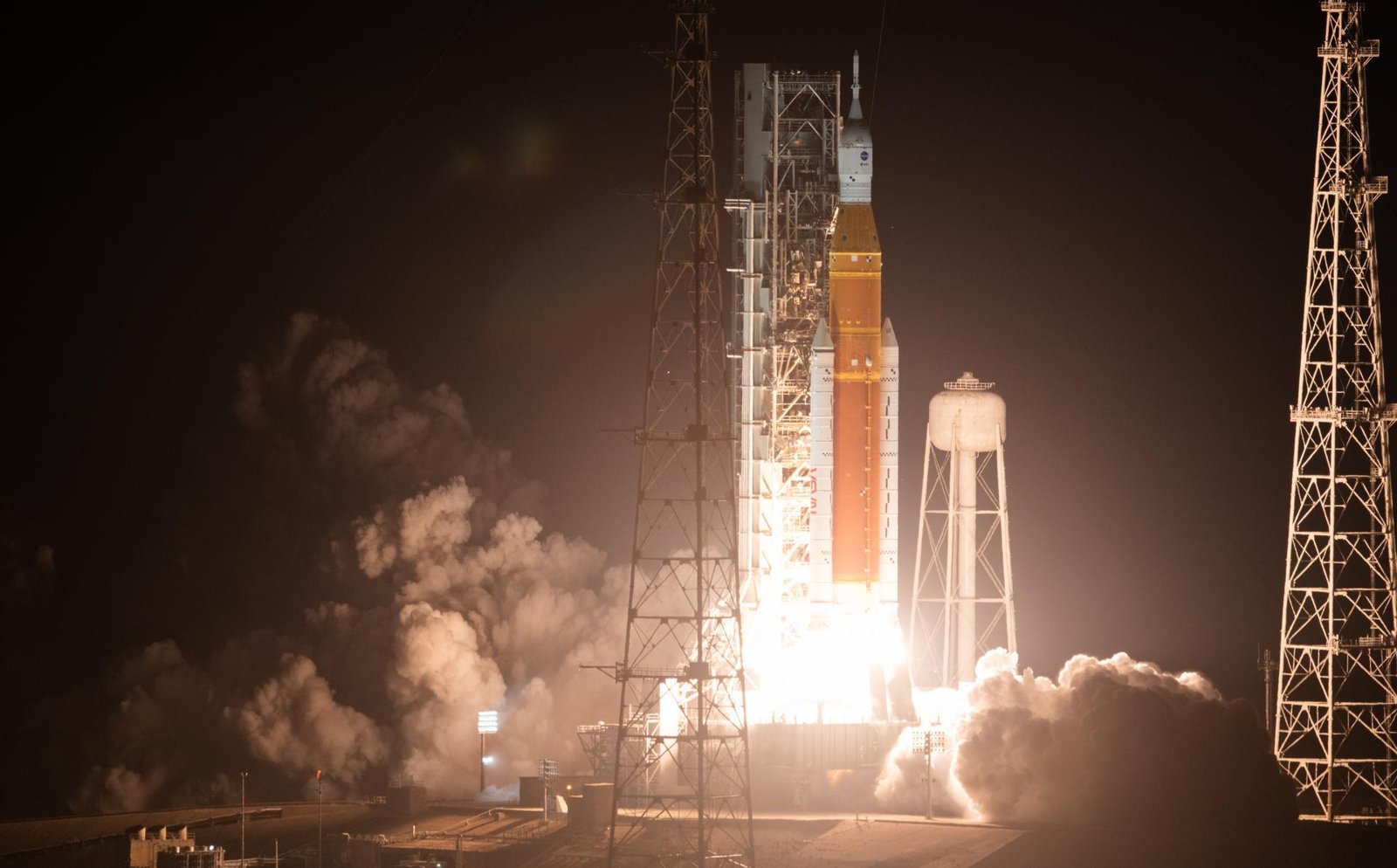
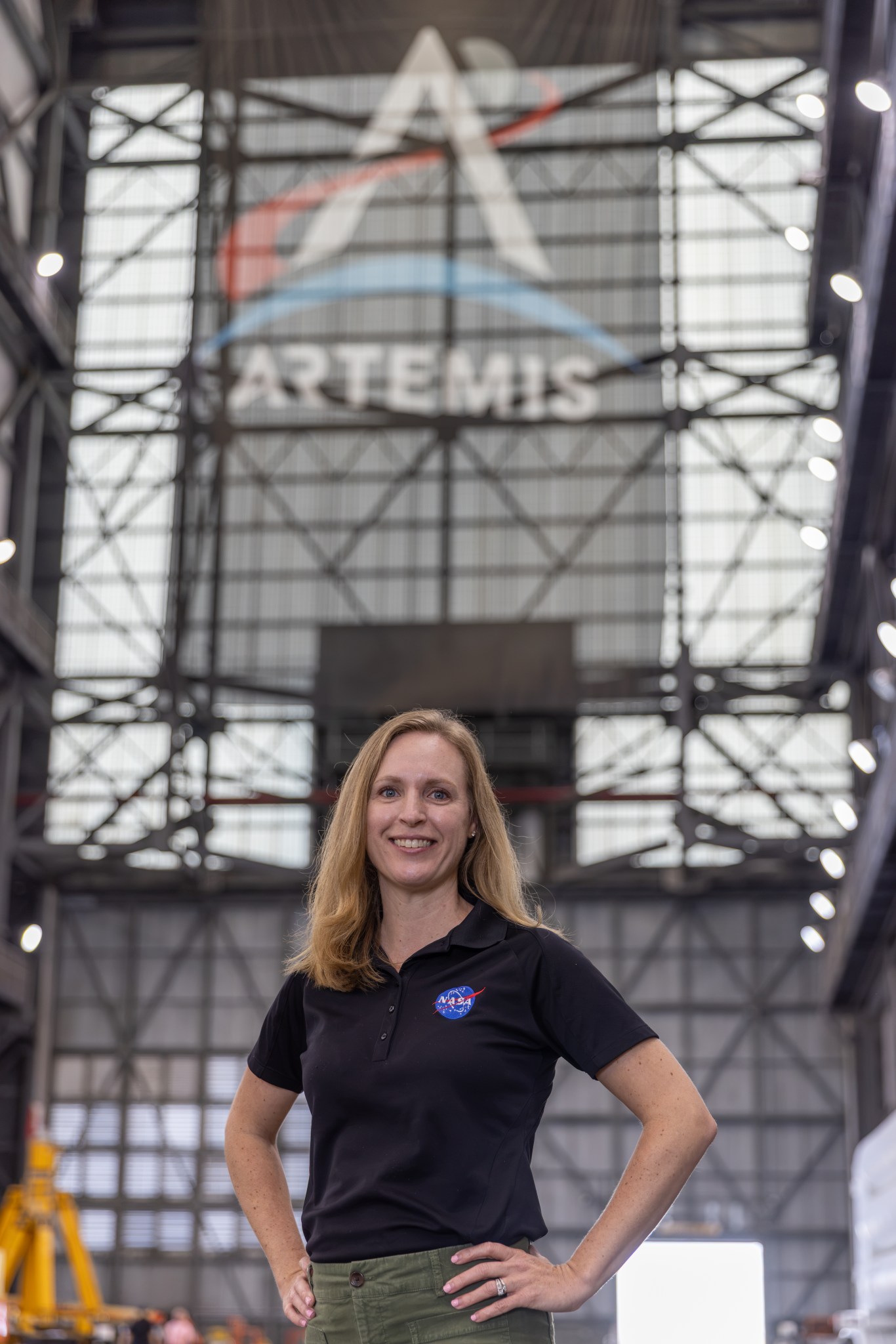
Allison Mjoen, NASA's operations manager for the Exploration Ground Systems Program, watched with awe as the SLS rocket roared to life during Artemis launch. Mjoen's 20-year career at NASA's Kennedy Space Center involved supporting missions across the Space Shuttle Program, International Space Station, and now Artemis. She coordinates spacecraft offline operations and develops integration plans for booster and Orion spacecraft operations.
This image from NASA's Hubble Space Telescope shows the edge-on, intermediate spiral galaxy NGC 1827, located 37 million light-years away in the constellation Columba. The image is part of a survey observing 260 satellite galaxies around 22 Milky Way-like host galaxies within a radius of about 32 million light-years. Hubble has already observed 111 of these galaxies and will observe the remaining 149 over the next 149 orbits.
NASA··1 min read
LESS NOISE. MORE SIGNAL.
A little further into the unknown.
Follow our open news feed. No inbox clutter. Just the latest dispatches, in your reader.

 Source image · NASA