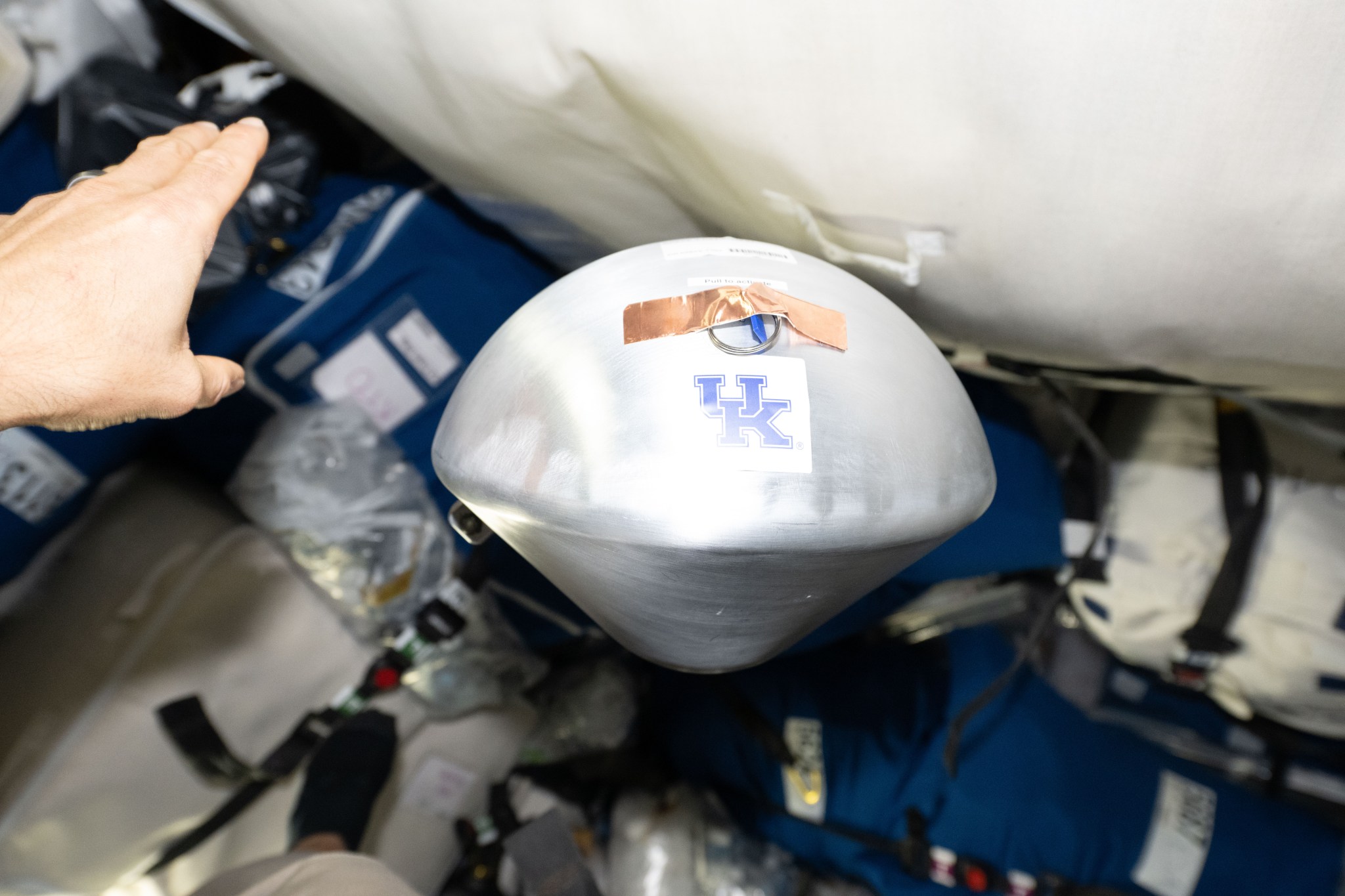
Three NASA-supported small spacecraft, including the ASCENT Propulsion Dual Mode CubeSat, Supernova Remnants and Proxies for ReIonization Testbed Experiment (SPRITE) CubeSat, and Small Spacecraft Propulsion and Inspection Capability (SSPICY) mission, are shown before being encapsulated in a SpaceX Falcon 9 ahead of launch on Oct. 1, 2026. The mission aims to demonstrate new propulsion technologies, study galactic dust and high-energy radiation, and advance satellite inspection capabilities.
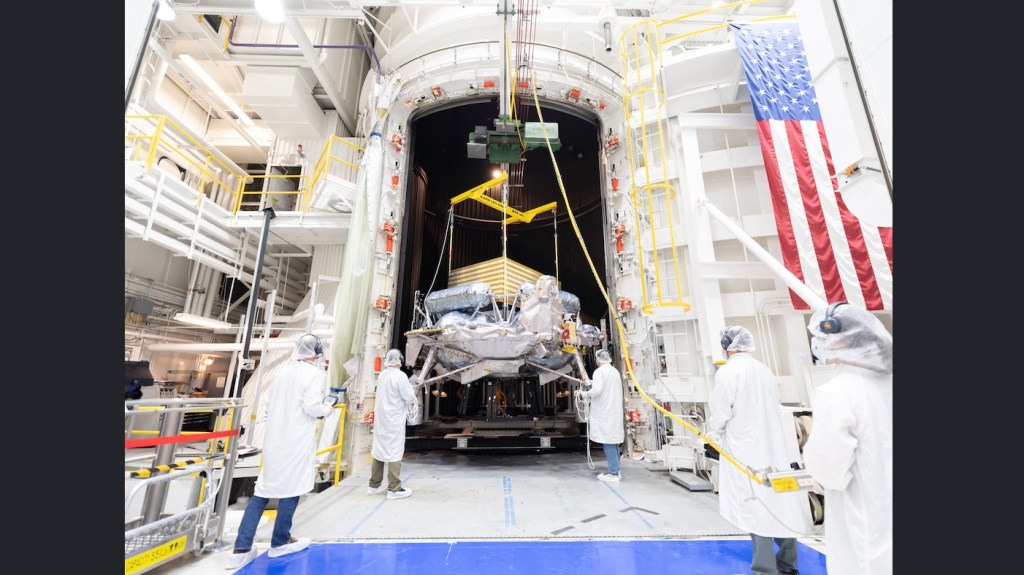
A lunar lander from Voyager Technologies completed nearly three months of environmental testing at NASA’s Jet Propulsion Laboratory in Southern California in late September 2026.
Complex mode shapes can appear in lightly damped structural systems, especially when two modes are closely spaced. This behavior is explained by nonproportional damping, which introduces an off-diagonal coupling term ε. The framework provides a simple physical interpretation of mode veering, complex mode formation, eigenvalue coalescence, and decay-rate splitting. It also offers a practical test-analysis bridge to estimate the effective interaction strength and determine proximity to the transition boundary.
A commercial lander that will be at the forefront of NASA’s efforts to establish a Moon Base, humanity’s first lunar outpost, has passed a series of critical tests at the agency’s Jet Propulsion Laboratory in Southern California.
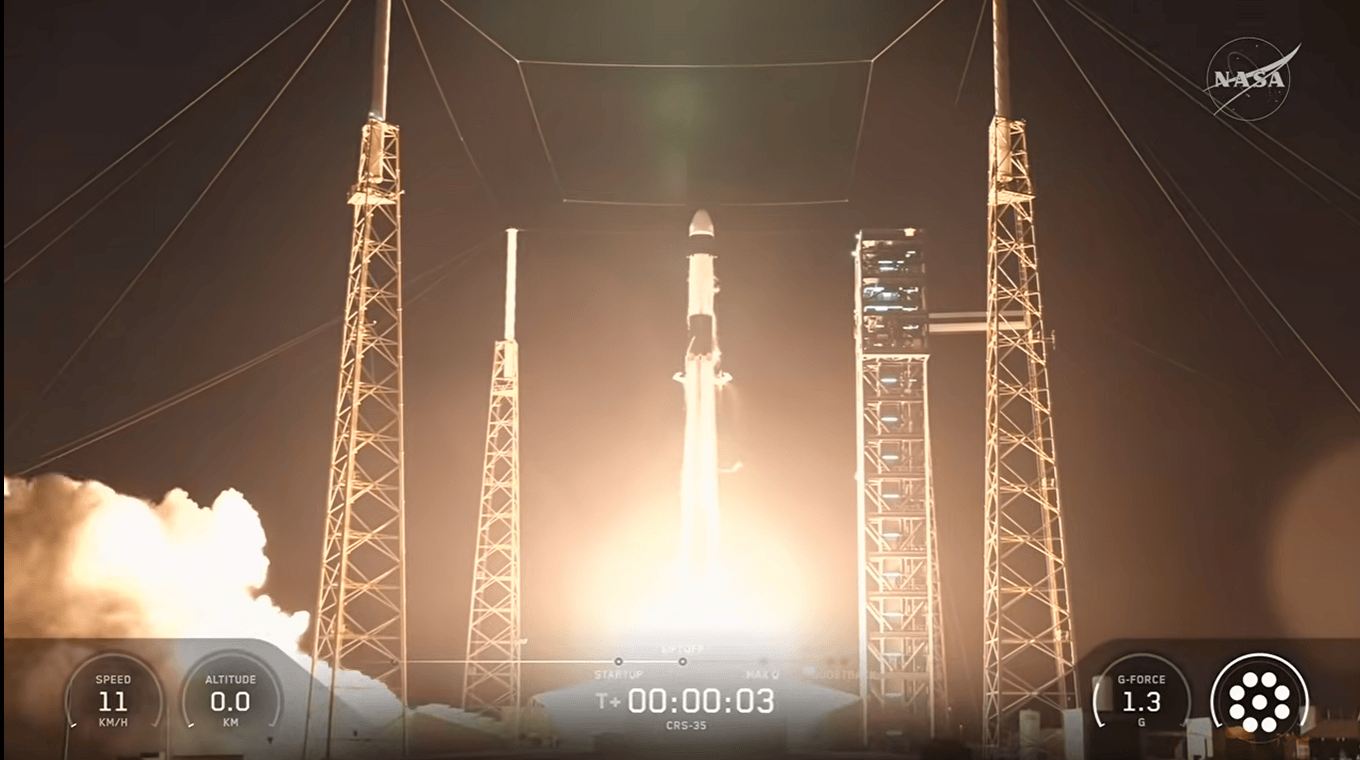
NASA’s SpaceX 35th commercial resupply mission lifted off at 6:33 a.m. EDT Tuesday aboard a Falcon 9 rocket from Space Launch Complex 40 at Cape Canaveral Space Force Station in Florida, carrying more than 6,300 pounds of supplies and hardware, bound for the International Space Station.
A geologic feature in Western Australia, known as Spider Crater, is a remnant of a meteorite impact that occurred hundreds of millions of years ago. The crater, measuring about 13 kilometers by 11 kilometers, has an oval shape with a central uplift and sandstone ridges that have endured while other rock layers have eroded away. Scientists initially struggled to explain its formation but identified shatter cones, which are only formed by intense shock waves, as evidence of a past impact.
NASA's SpaceX CRS-35 mission will send experiments focused on human and plant health and drug-resistant organisms to the International Space Station. The research, supported by the Biological and Physical Sciences division, includes 3D brain models, a crop disease study, a faster health assessment method, and an analysis of antibiotic-resistant bacteria. The precision health investigation aims to understand how the human brain responds to stress in space, potentially aiding future missions to the Moon and beyond.
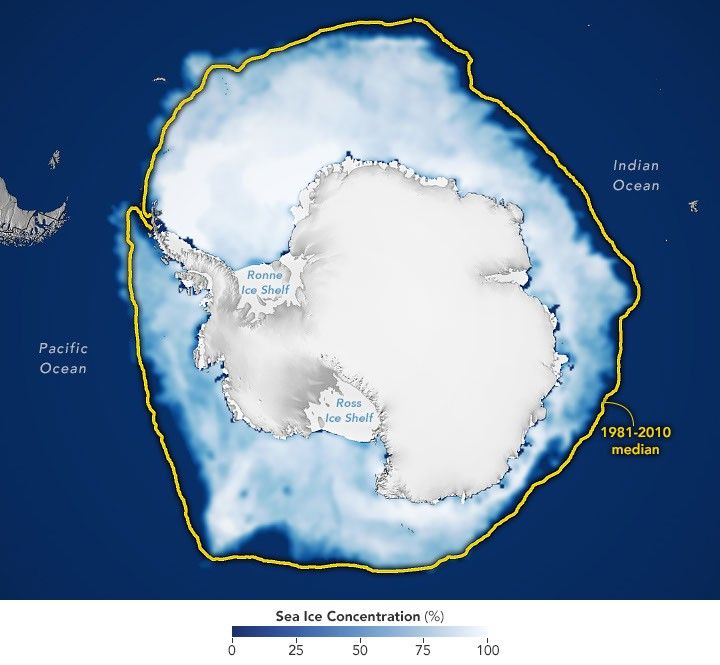
This story is an update to the Antarctic sea ice feature in our World of Change series tracking long-term change on Earth's surface through satellite imagery.
NASA is seeking US industry plans for the next generation of commercial space stations, aiming to maintain a sustained American presence in low Earth orbit after the International Space Station retires. The agency released a final Request for Proposals inviting companies to submit plans for commercial space stations, emphasizing the need for new opportunities for American industry and the potential for NASA to focus on more challenging missions. Proposals are due by Dec. 8, with contract awards expected in spring 2027.
NASA is testing heat shields that could protect astronauts returning from missions to the Moon and Mars. The experiment, called KREPE-3, uses the final moments of cargo spacecraft to gather data on next-generation thermal protection materials. It's part of a series of low-cost, high-impact missions under the EPSCoR program.
A stunning image from NASA's James Webb Space Telescope shows galaxies in a galaxy cluster called MACS J0454.1-0300, where the golden galaxies appear to be part of the cluster but are actually much farther away. This is due to gravitational lensing, where the immense mass of a foreground object bends and magnifies the light from a more distant object in the background.
Media are invited to join NASA for a media teleconference at 4 p.m. EDT, Thursday, Oct. 15, to preview the agency’s contributions to JAXA’s (Japan Aerospace Exploration Agency) Martian Moons eXploration (MMX) mission.
NASA announces two new initiatives to deepen scientific understanding and accelerate innovation for the Science: A Golden Age Summit. The programs reflect NASA's commitment to pioneering research and advancing the Trump Administration's vision. A peer review initiative and a fellowship for researchers are highlighted. NASA aims to be at the forefront of the new Golden Age of American innovation and discovery.
Solar Orbiter spacecraft has traced the origin of mysterious magnetic switchbacks in the solar wind's magnetic field. By fingerprinting particles within switchbacks, scientists have revealed more about solar magnetism and its role in dangerous solar storms. The spacecraft's observations have helped solve a piece of the puzzle regarding switchback formation, confirming their S-shaped nature.
Scientists using Mars Express and a meteorological model have discovered that Mars's Arsia Mons Elongated Cloud (AMEC) may be an orographic cloud, a type of cloud also seen on Earth. However, simulations have not accurately reproduced the cloud's behavior, and researchers are now exploring its unique dynamics and behavior.
Google Earth AI introduces a new model, the Population Dynamics Foundation Model (PDFM), to address data gaps and temporal reporting lags in public health. The model, based on self-supervised learning, integrates diverse signals like search trends, human mobility, and environmental determinants into compact embeddings, enhancing existing epidemiological workflows without requiring extensive custom data engineering. The model is demonstrated in five case studies, showing its effectiveness in various disease domains and geographic settings.
Google Research··1 min read
LESS NOISE. MORE SIGNAL.
A little further into the unknown.
Follow our open news feed. No inbox clutter. Just the latest dispatches, in your reader.

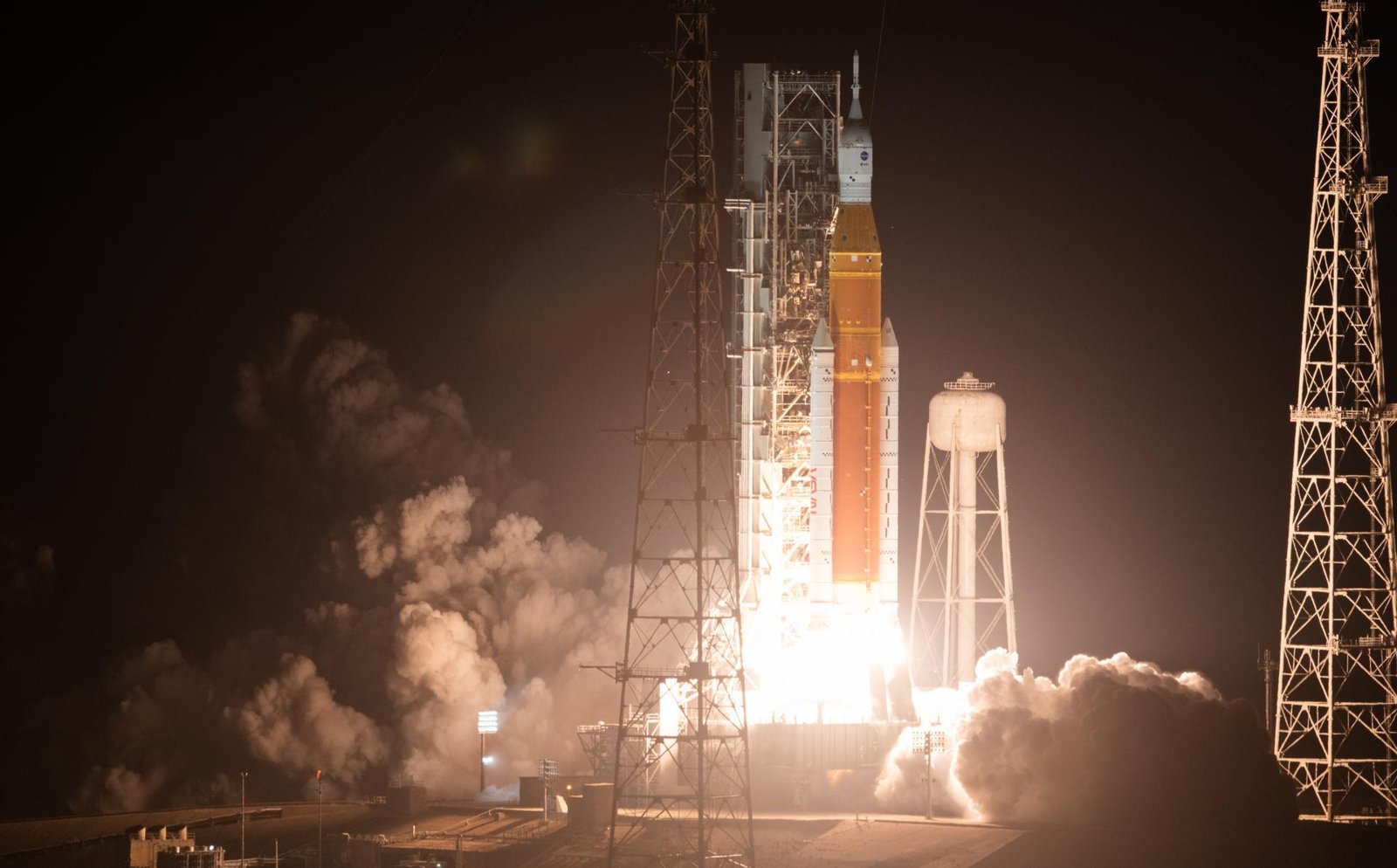 NASA/Joel Kowsky · Archive image